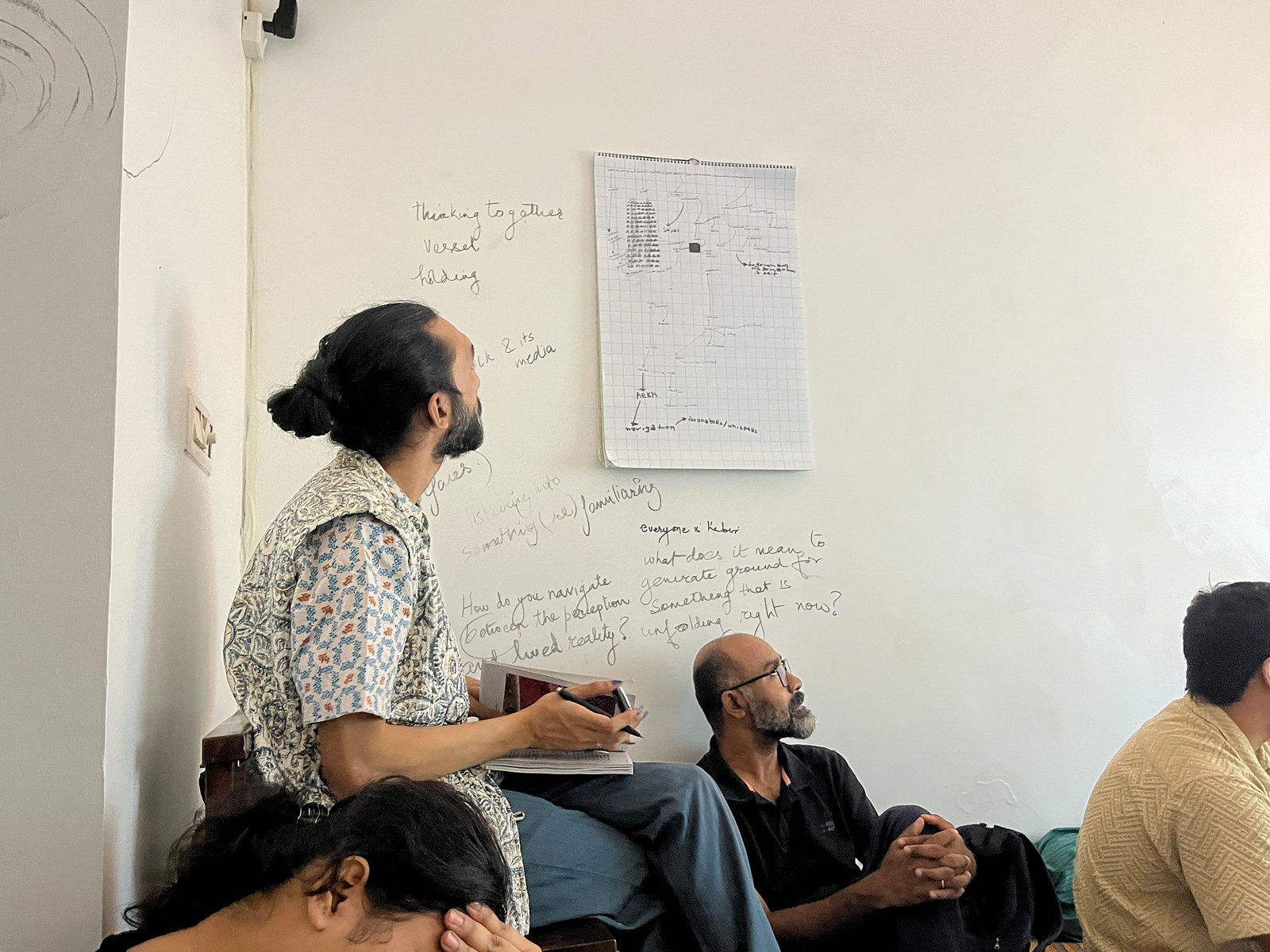
Hekh was invited for an interactive walkthrough of the Listening Biennale at Khoj on 13th October, 2025. The walkthrough brought together Soumya Yadav, Sabaah, Sabar, Sajal Bhagalia and Rahul Juneja as amplifiers in the mix.
The walkthrough re-introduced several sonic frameworks rooted deeply in the Indian folk traditions, and their intertwining with new paradigms of listening, evolving, and inhabiting liminal spaces. What does it mean to listen, as a form of observation, ingestion, digestion, and extension of the world?
The mix was conceptually and materially in conversation with the idea of ‘Third Listening’ which Listening Biennale produces; streamed via Radio Roohafza, an artist- run radio cum server in Delhi by Kaushal Sapre and Aasma Tulika.
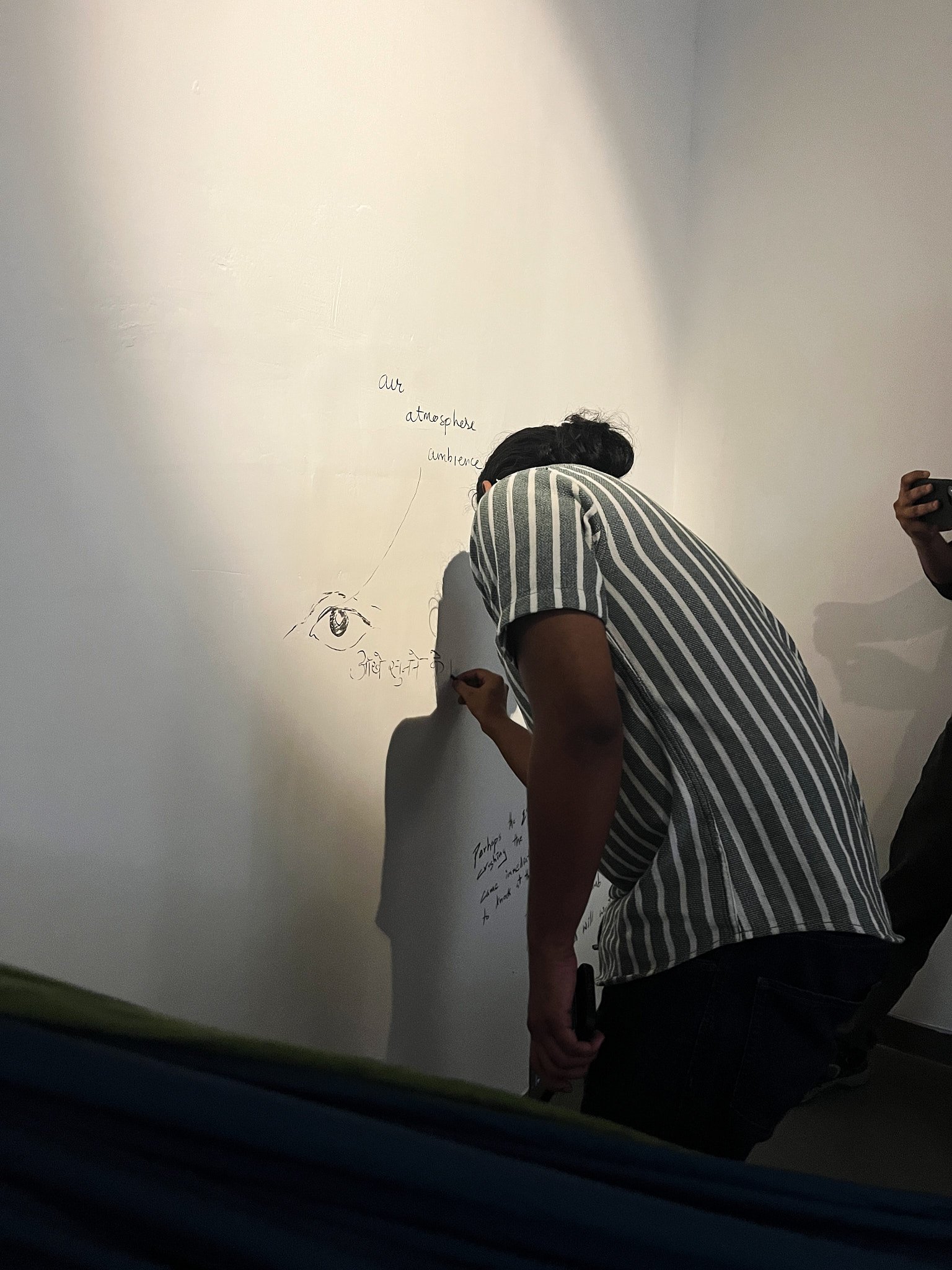
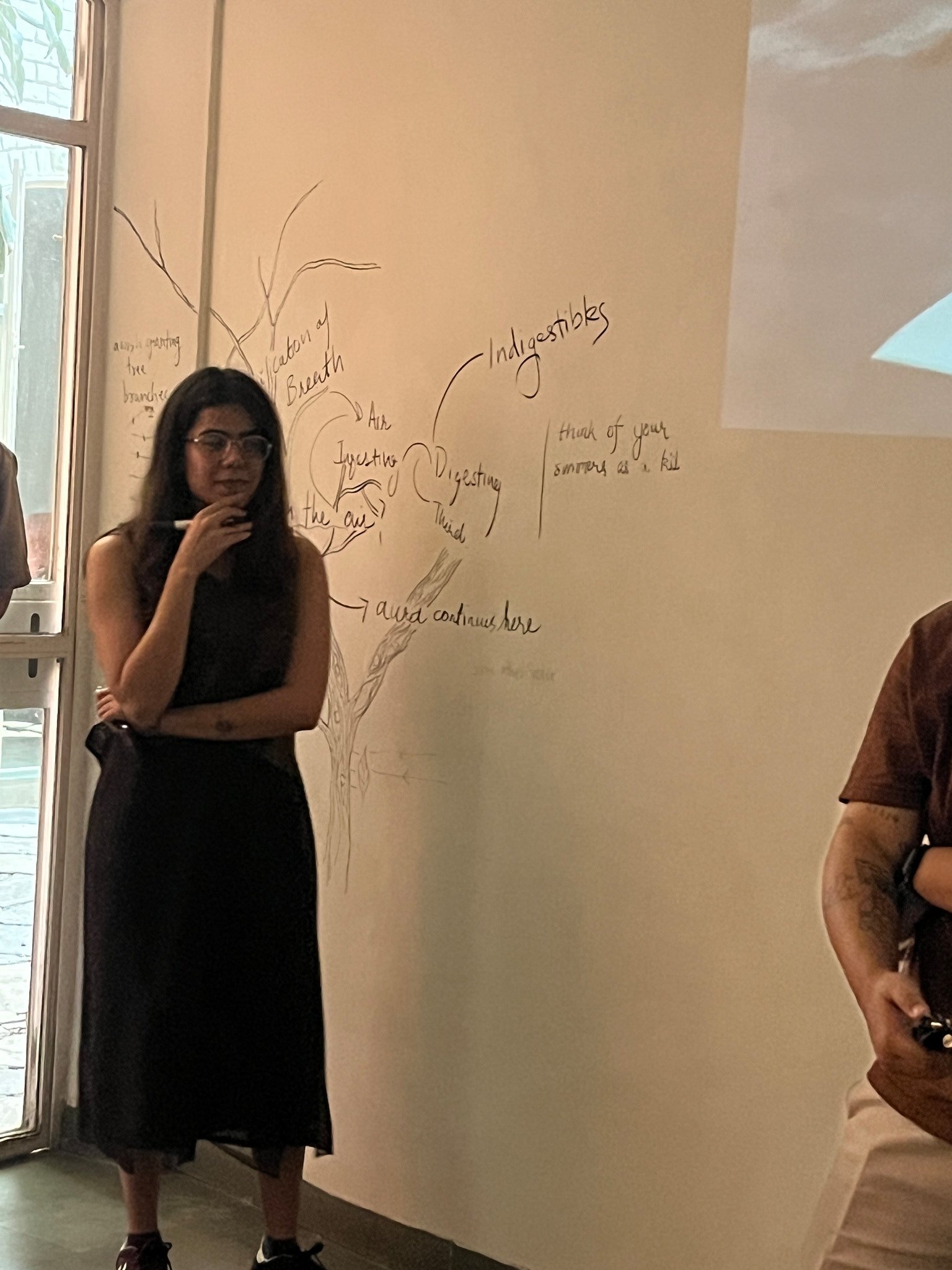
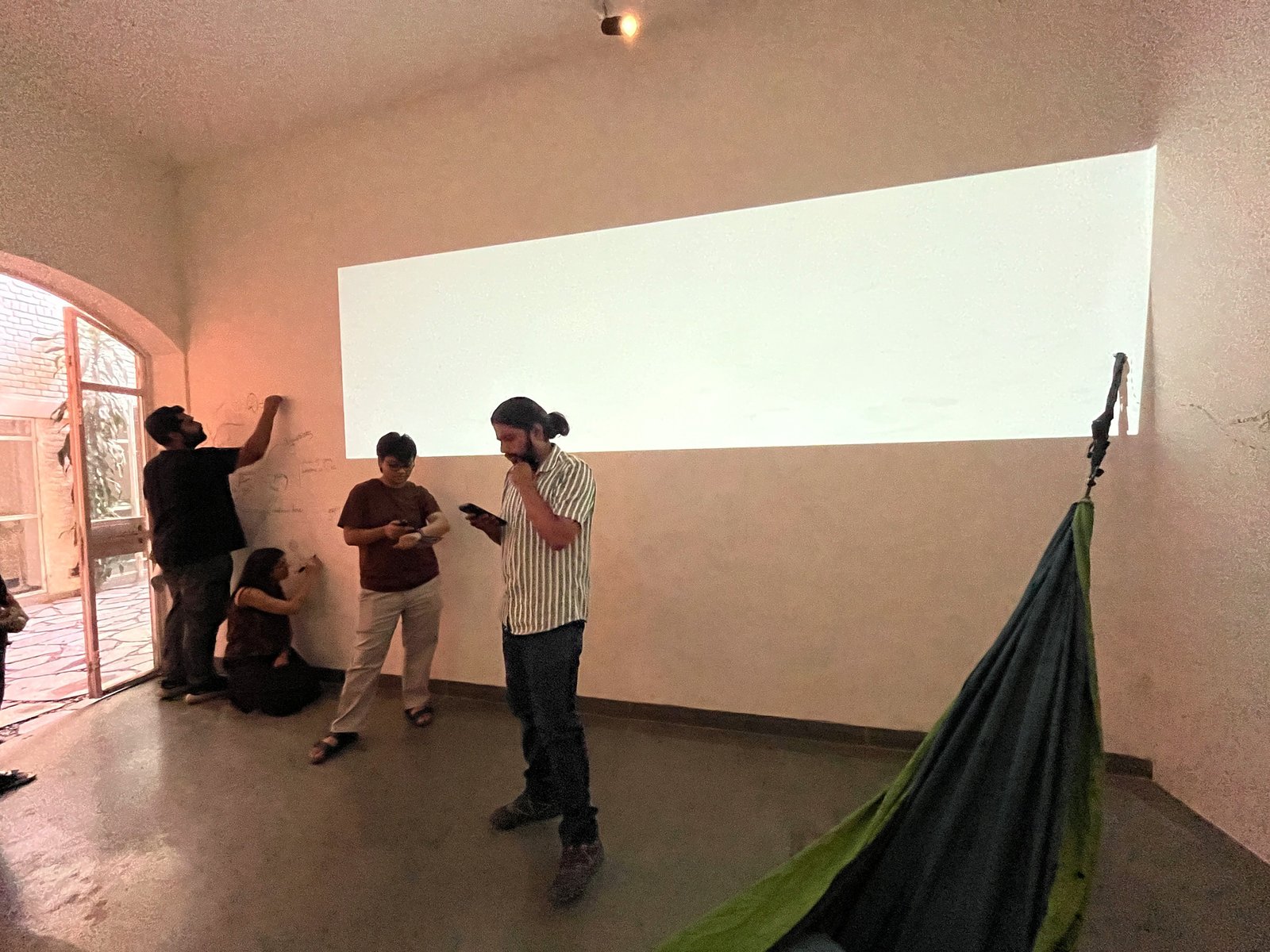
Soumya Yadav talking about the importance of listening as an act of digestion, and the impossibility of complete digestion. Sabar and Rahul are inscribing notes into the biennale space in real time.
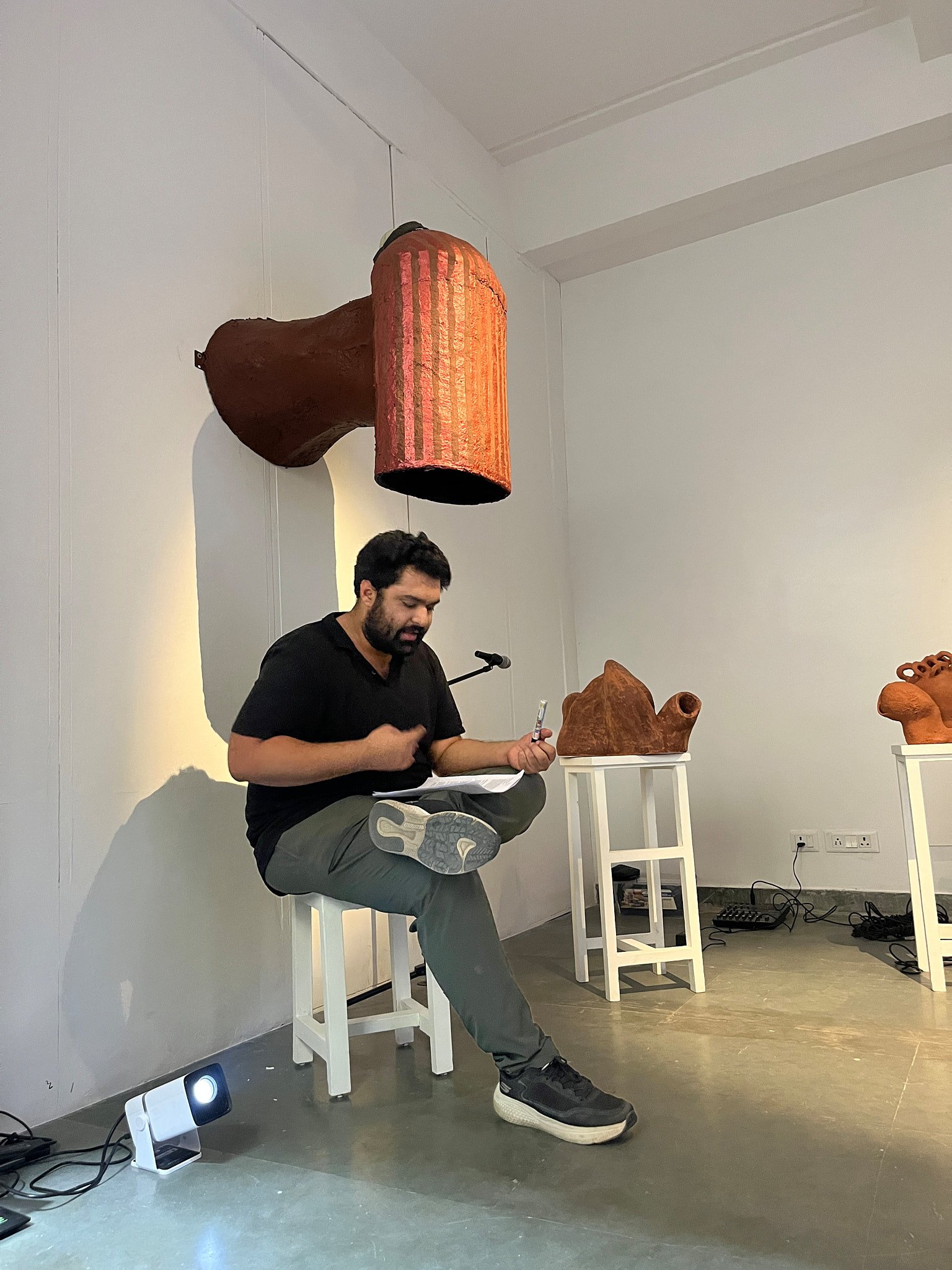
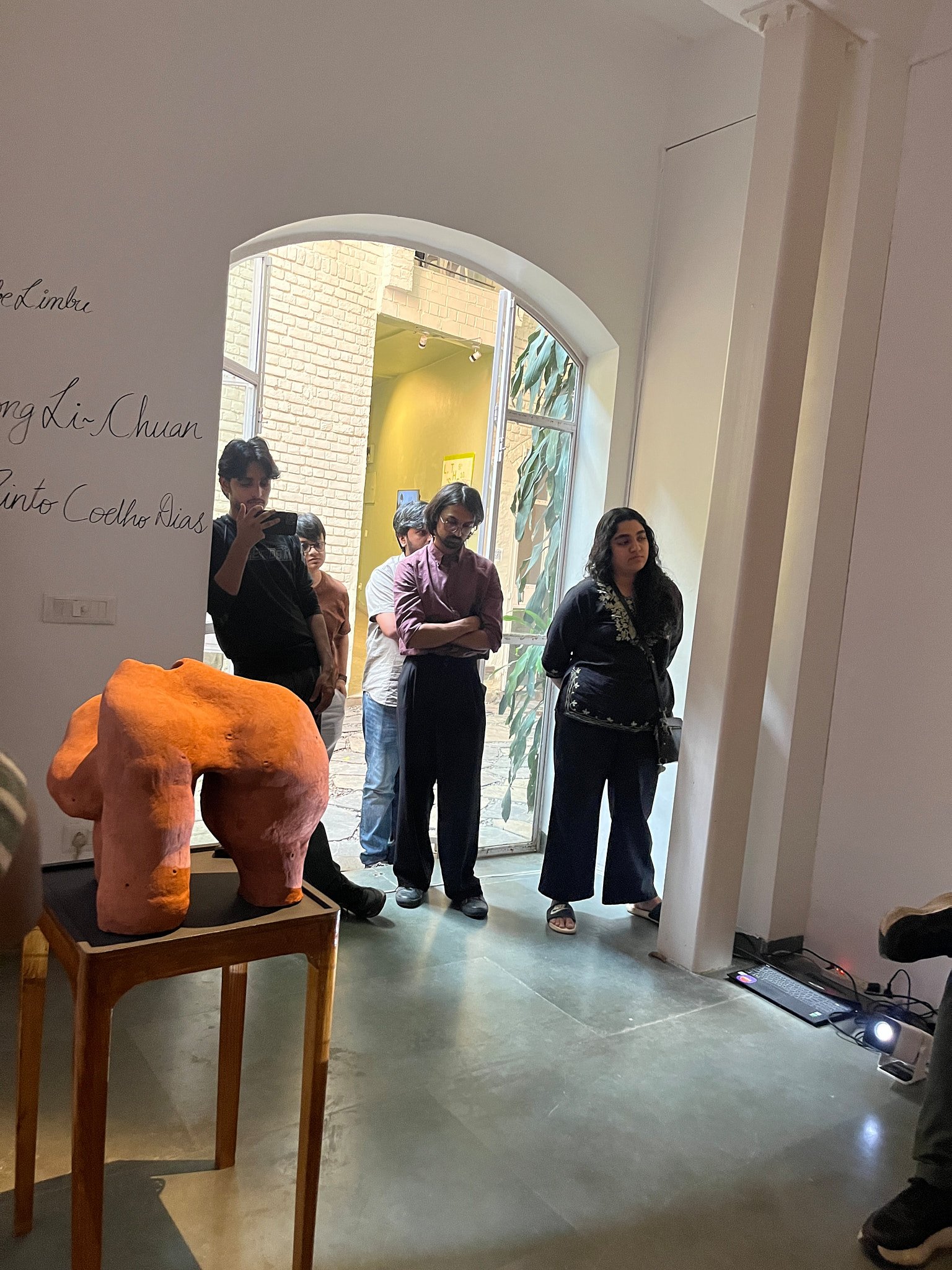
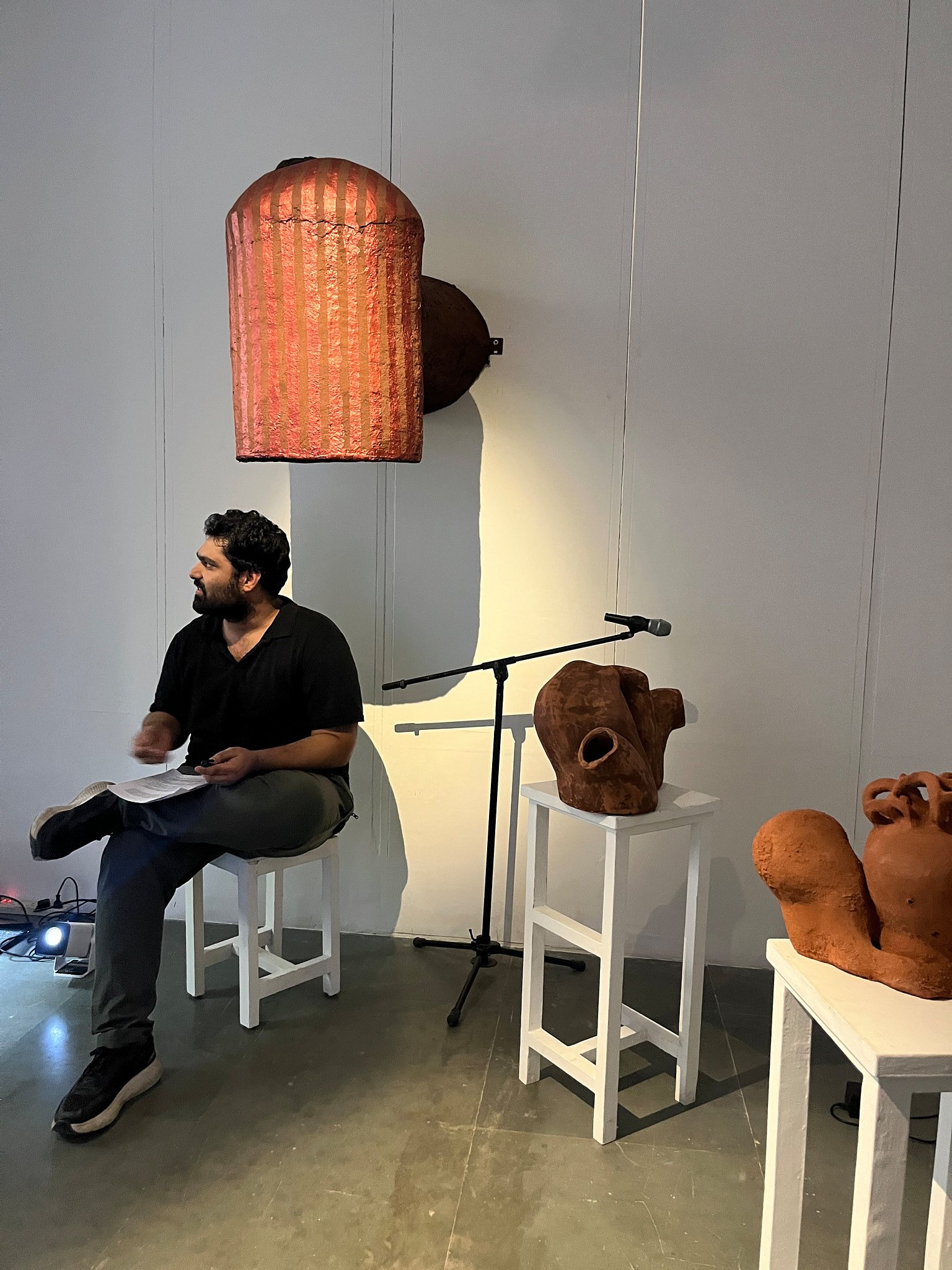
Rahul Juneja talking about Sohni Mahiwaal, one of the 7 great tragedies of Sindh; where an unbaked clay pot becomes the vessel for histories of gendered violence, societal norms and the tragic tale of death as its used to cross a raging river. As a gesture of remembrance, Rahul sings into a sonic listening portal made out of clay by artist Gitanjali Poluru to leave an echo for this clay as it returns to the grand sea of time.
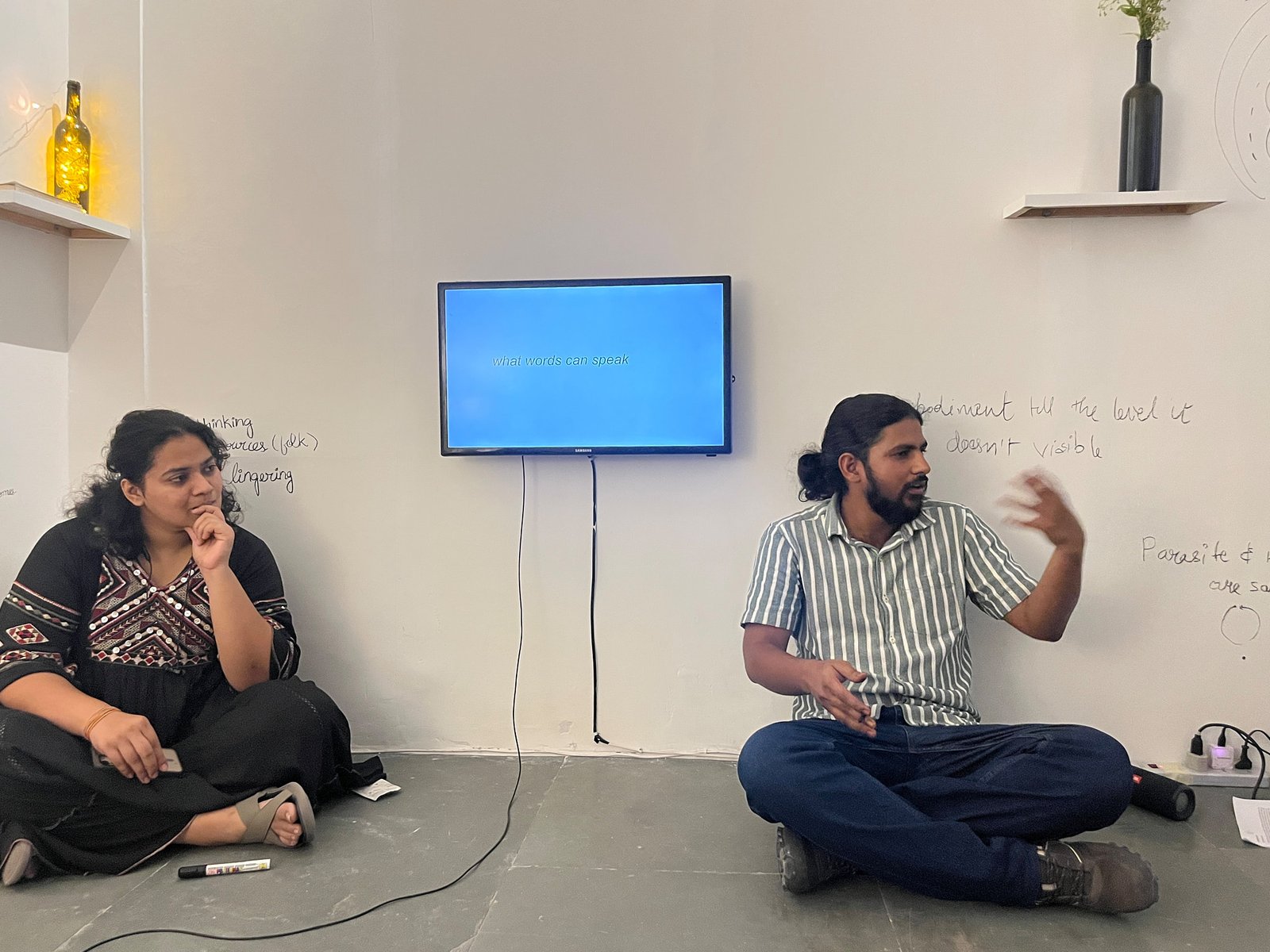
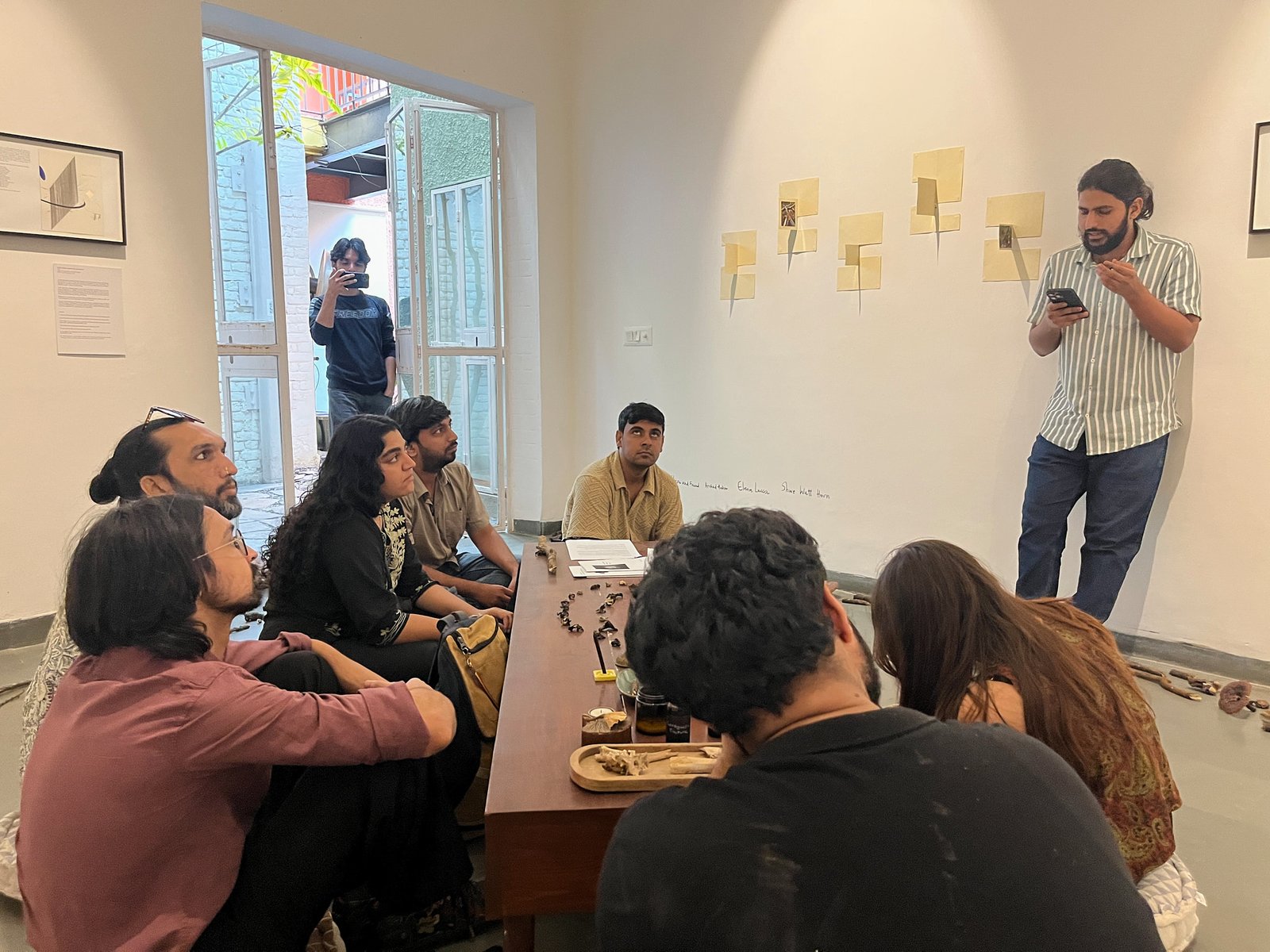
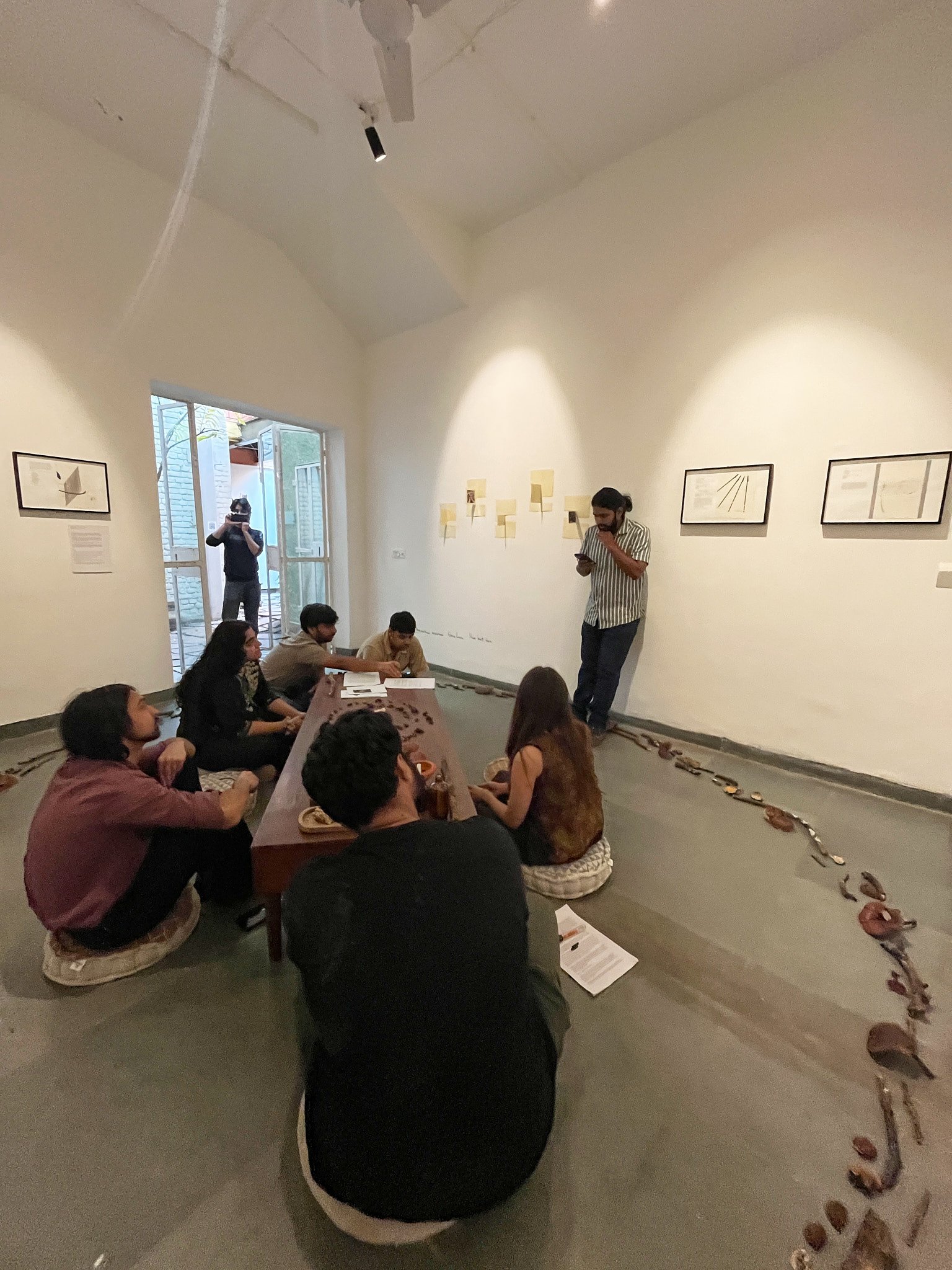
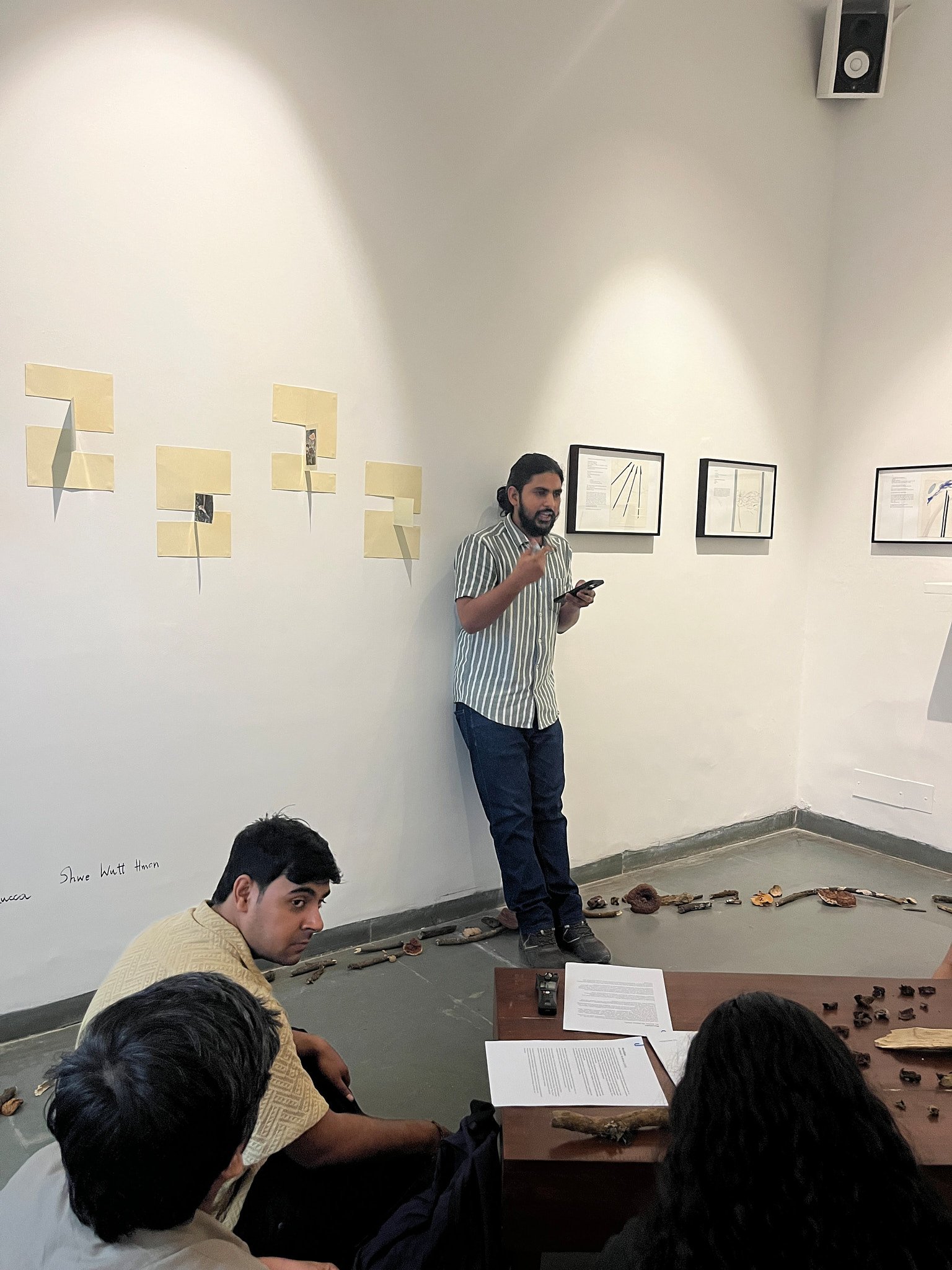
Soumya Yadav talking about the politics of sound through different types of fungi; what grows, outgrows, metabolises, and exists in symbiosis with each other.
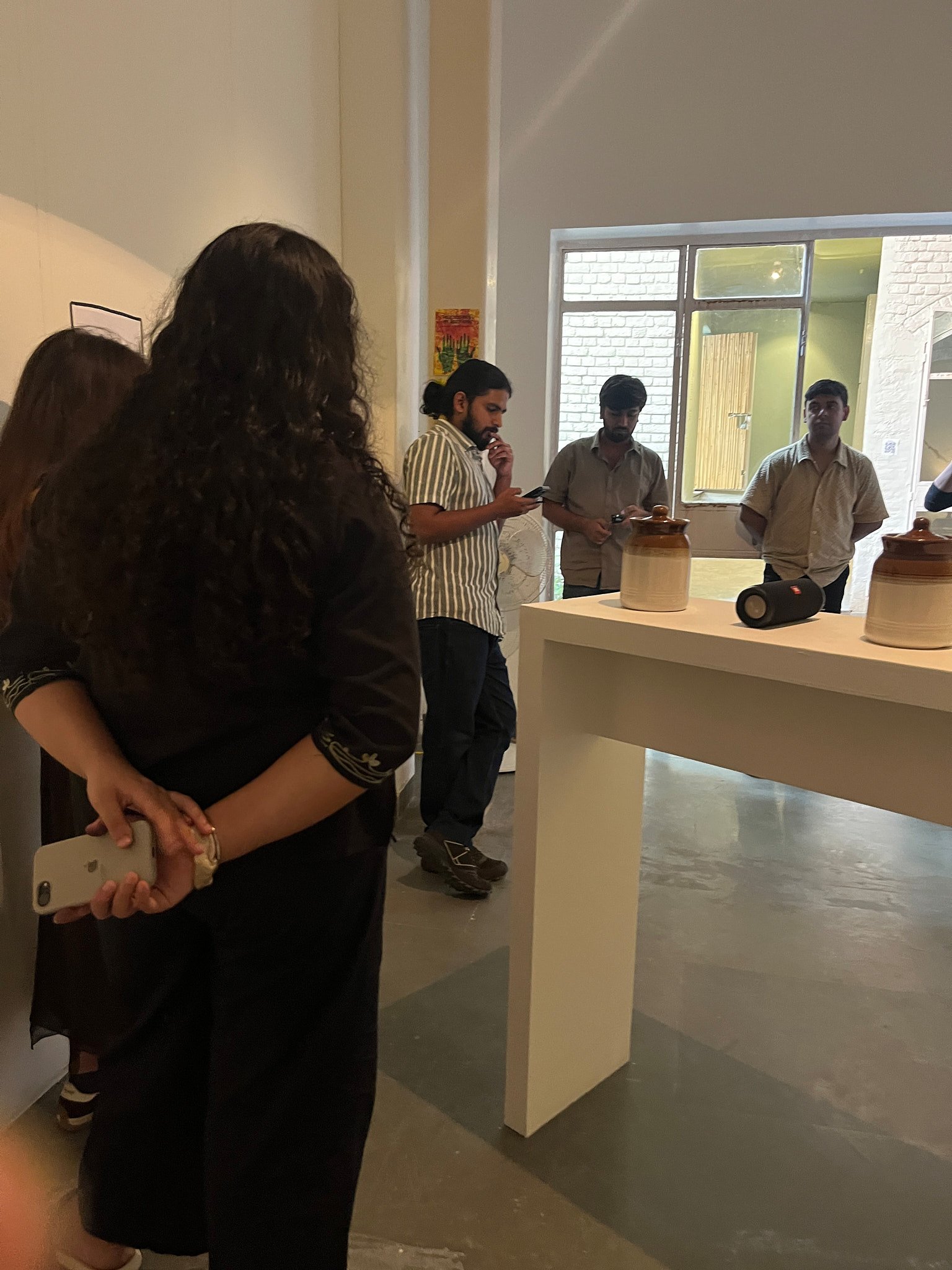
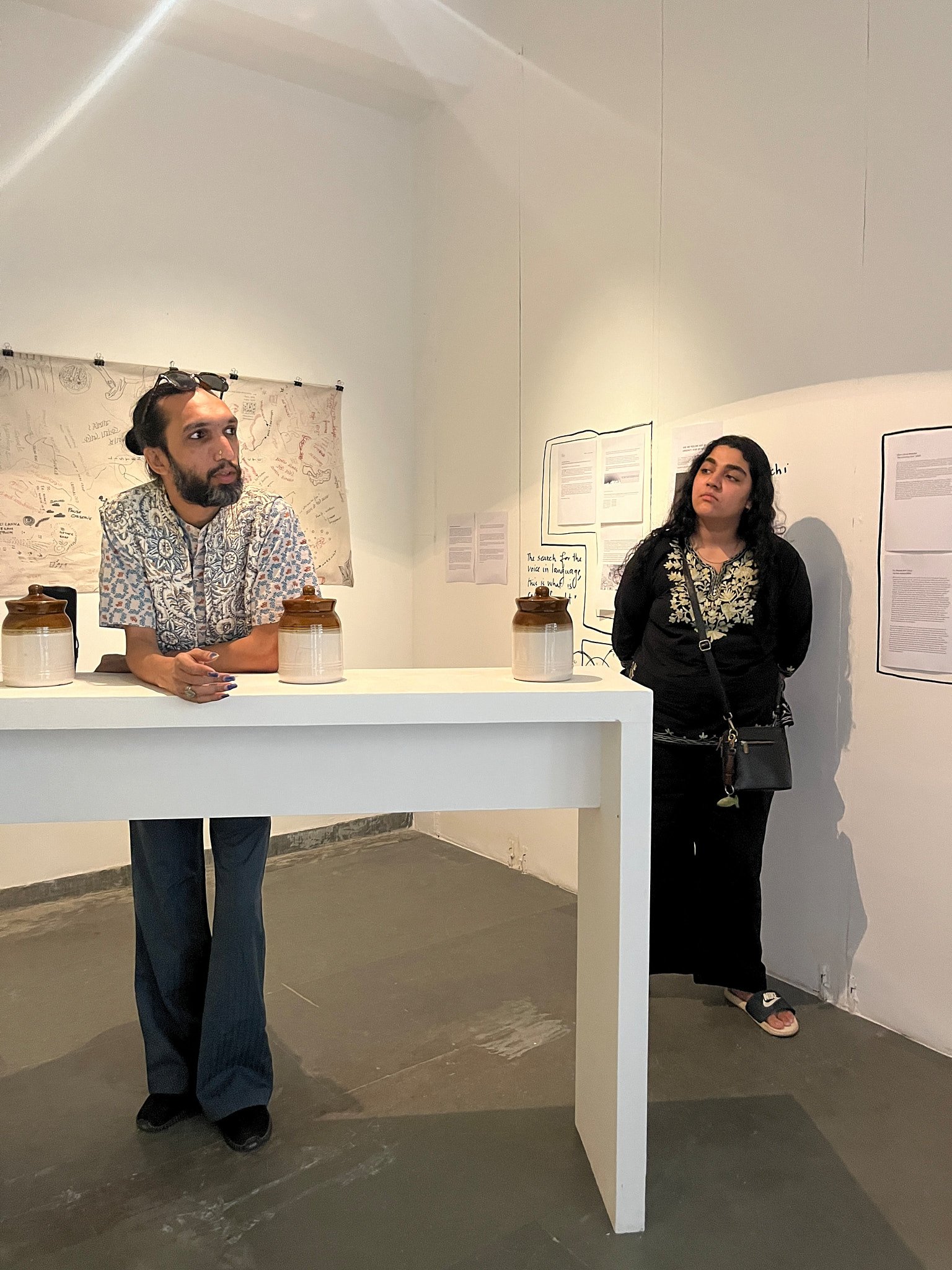
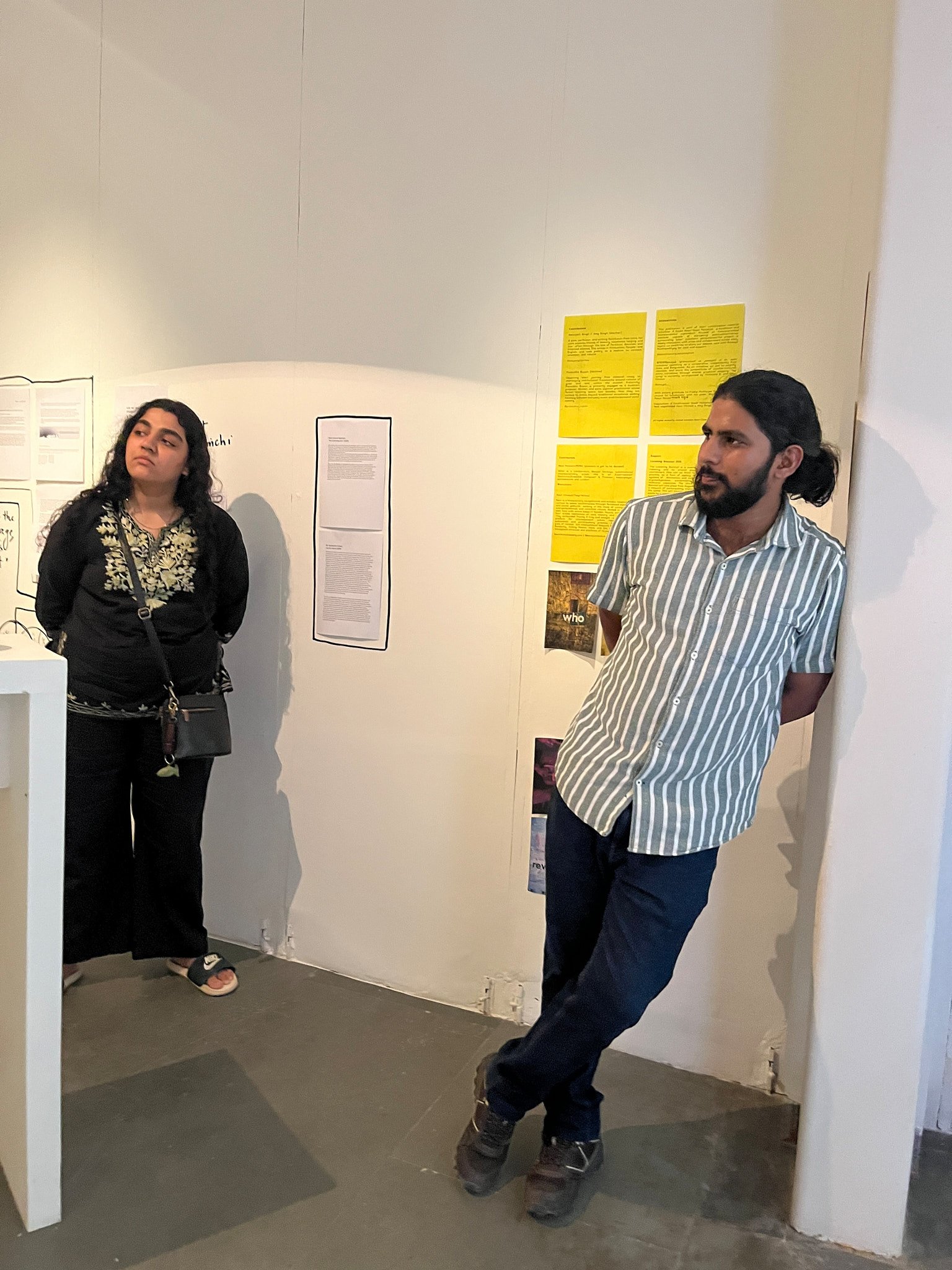
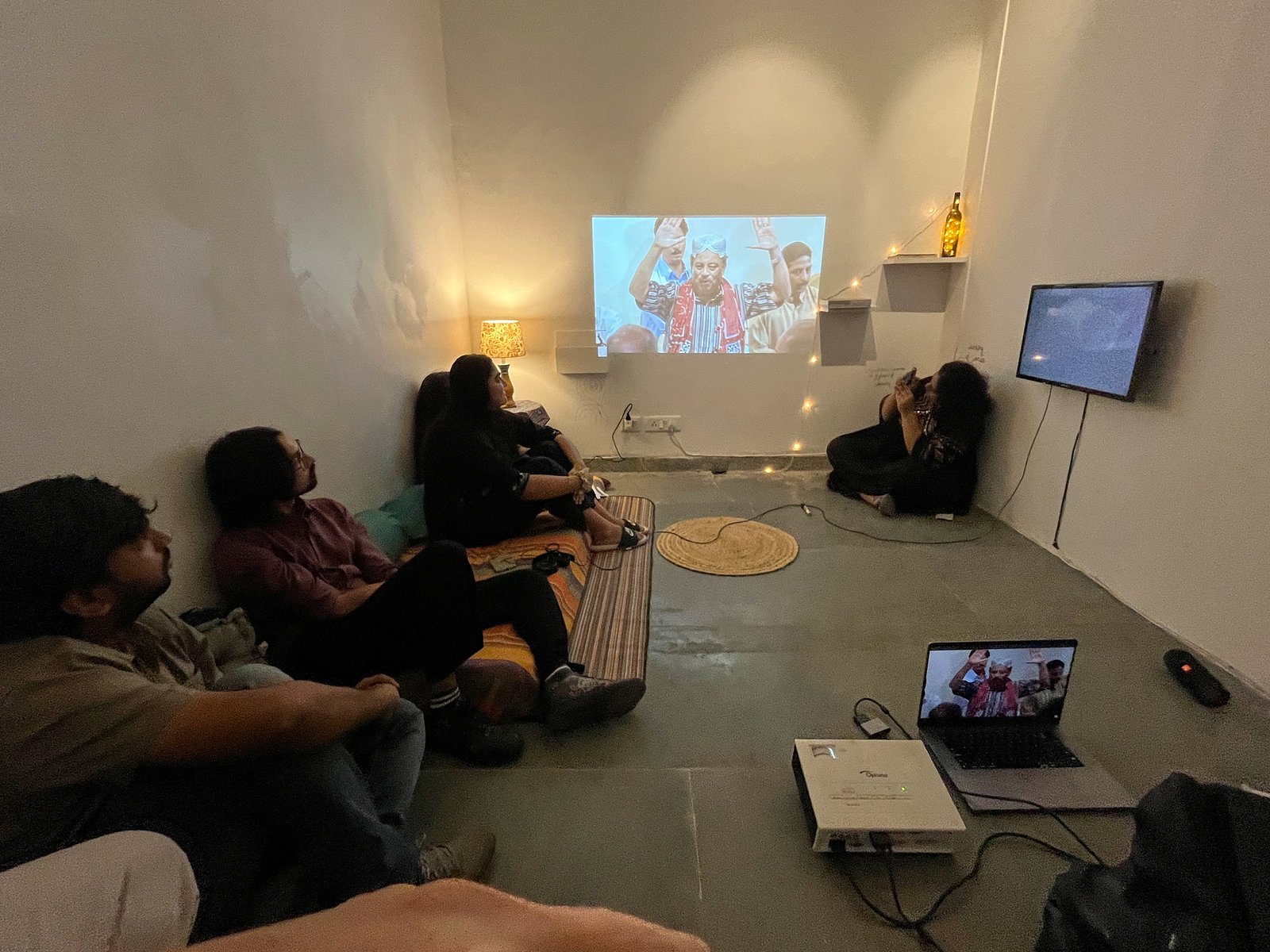
Soumya playing folk songs sung by his mother. These songs are usually sung by wives of migrant labourers who cannot return to their home. The songs were in a sharp reminder to listening to these personal, unknown histories intertwined with larger systems of labour, and economy in India. Kaur Chimuk talking about their installation, where the traditional clay jars used to ferment pickles, instead ferments sounds and time- with a speaker placed in each of the containers.
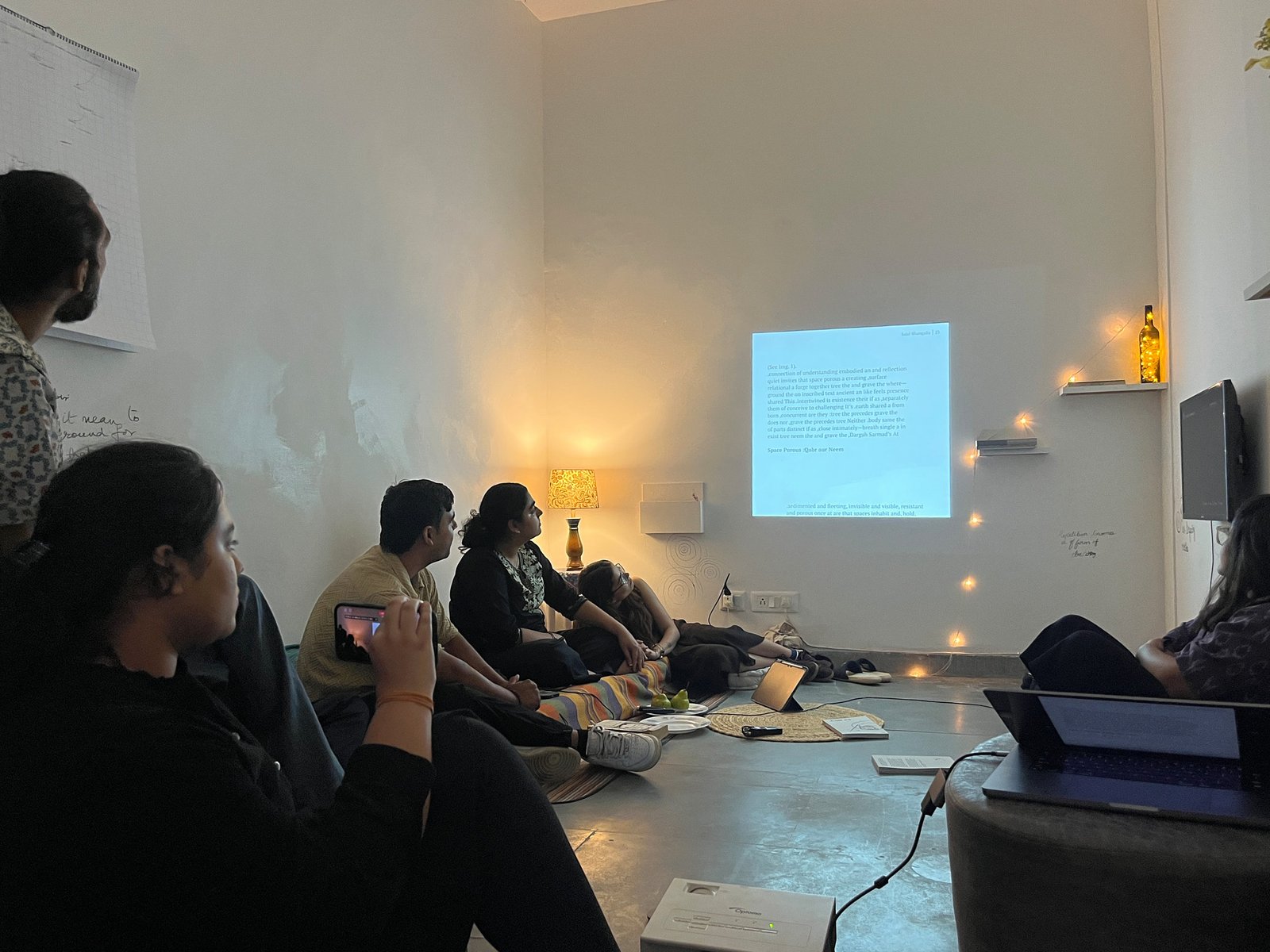
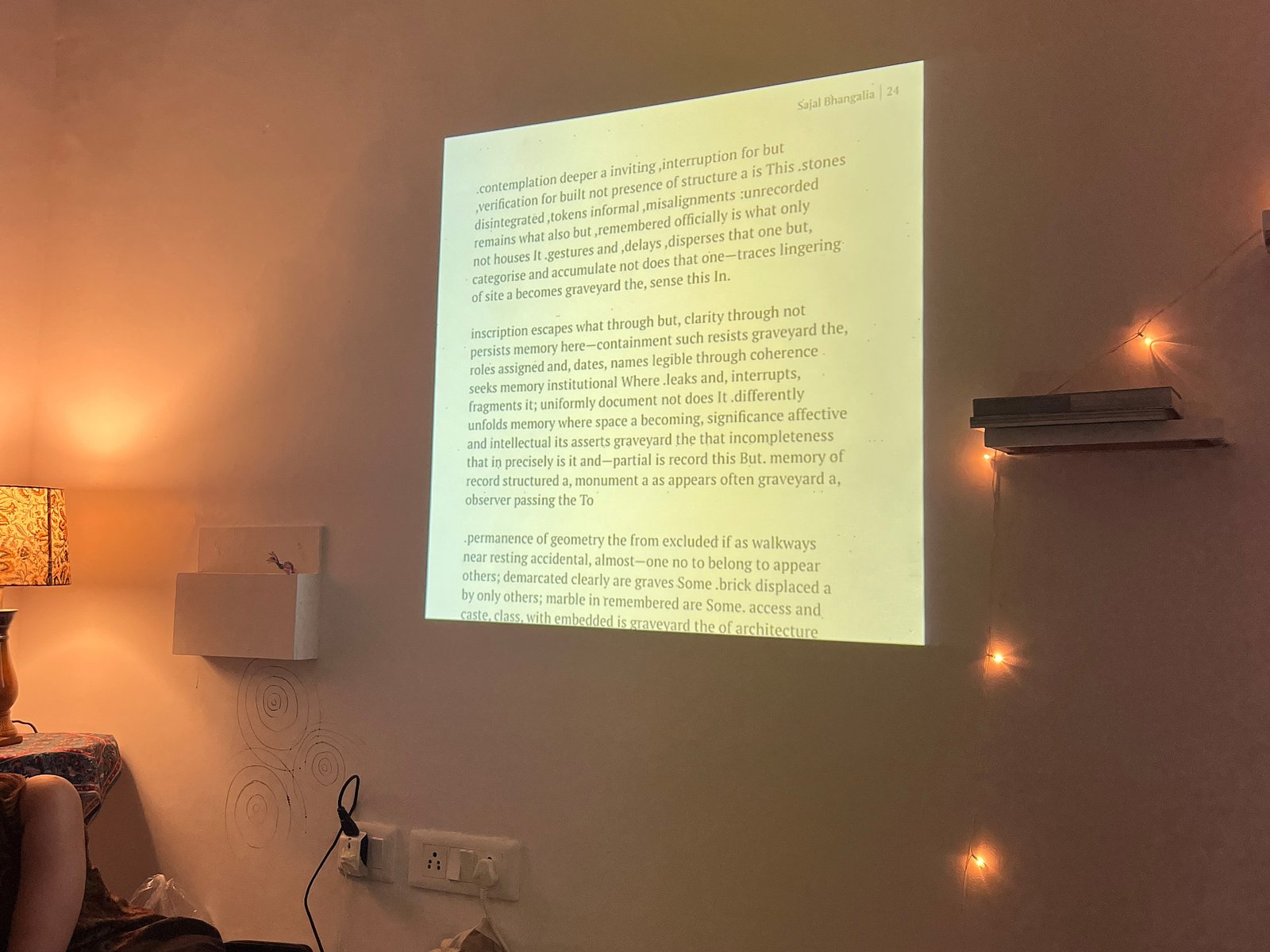
Sajal Bhangalia sharing and reading his text “Neele Aasman Ke Neeche”, talking about graveyards as a site of resurgence and resistance to institutionalisation. Asking the question: What if the past we listen to, is not the past at all?
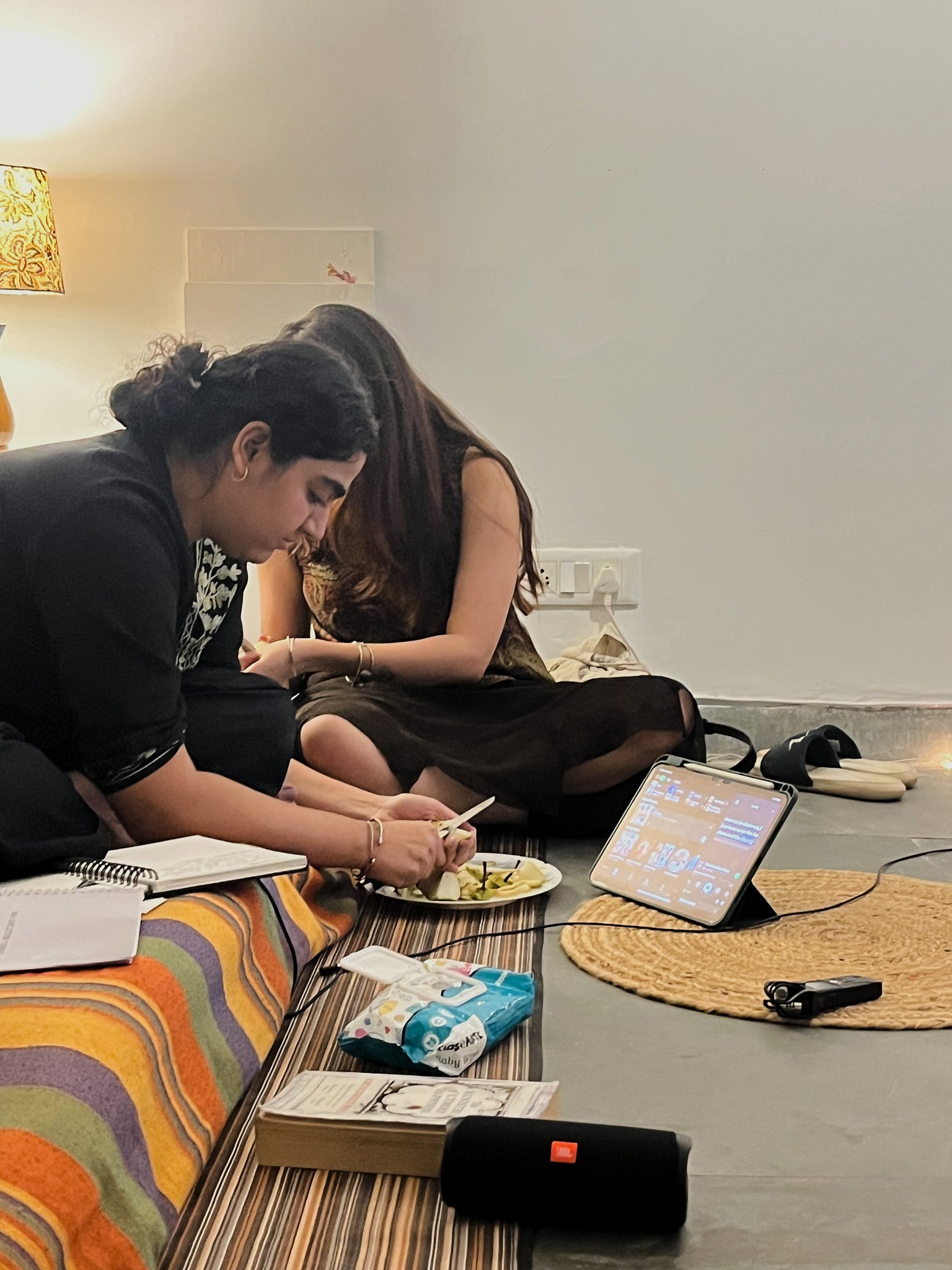
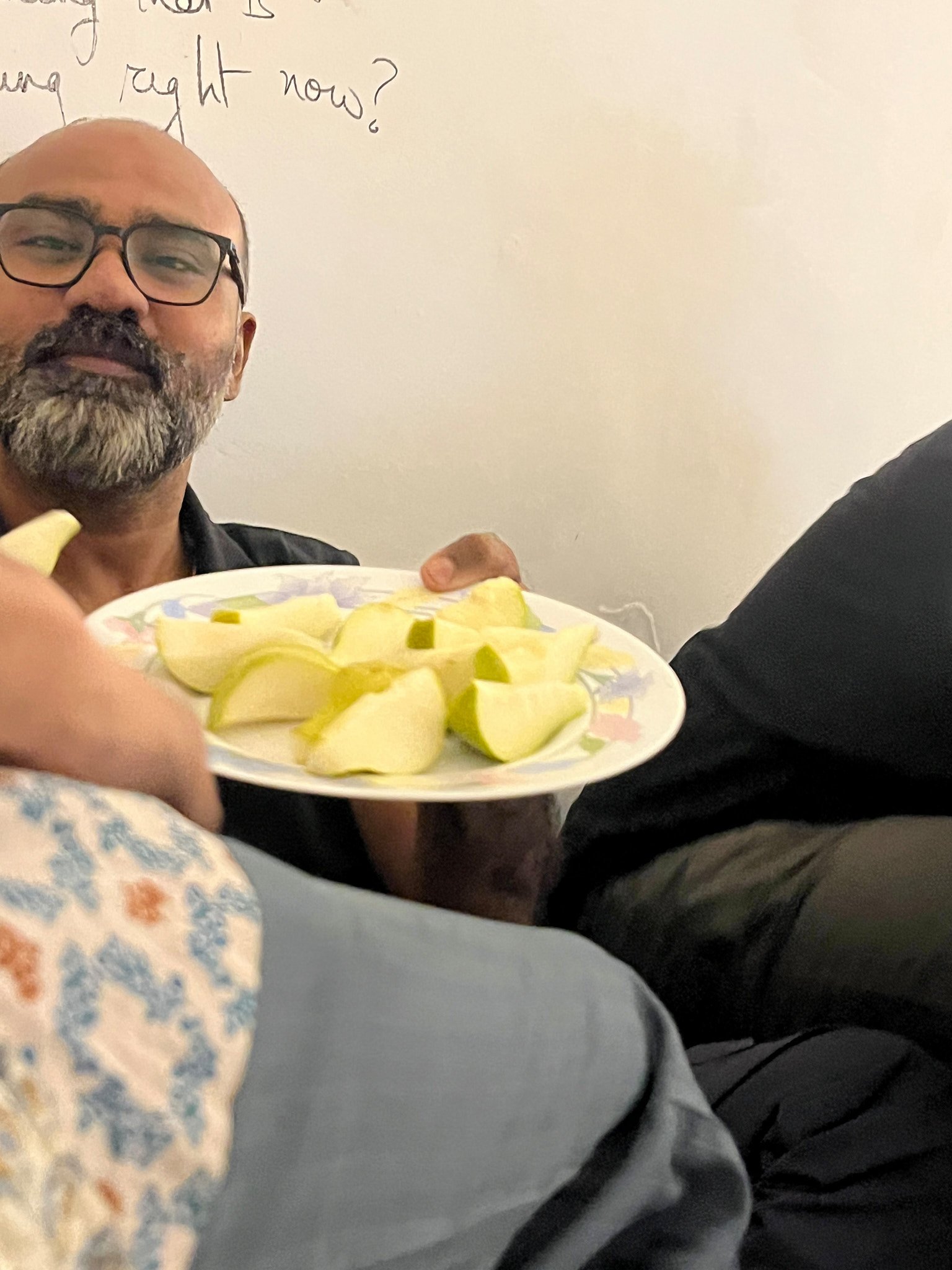
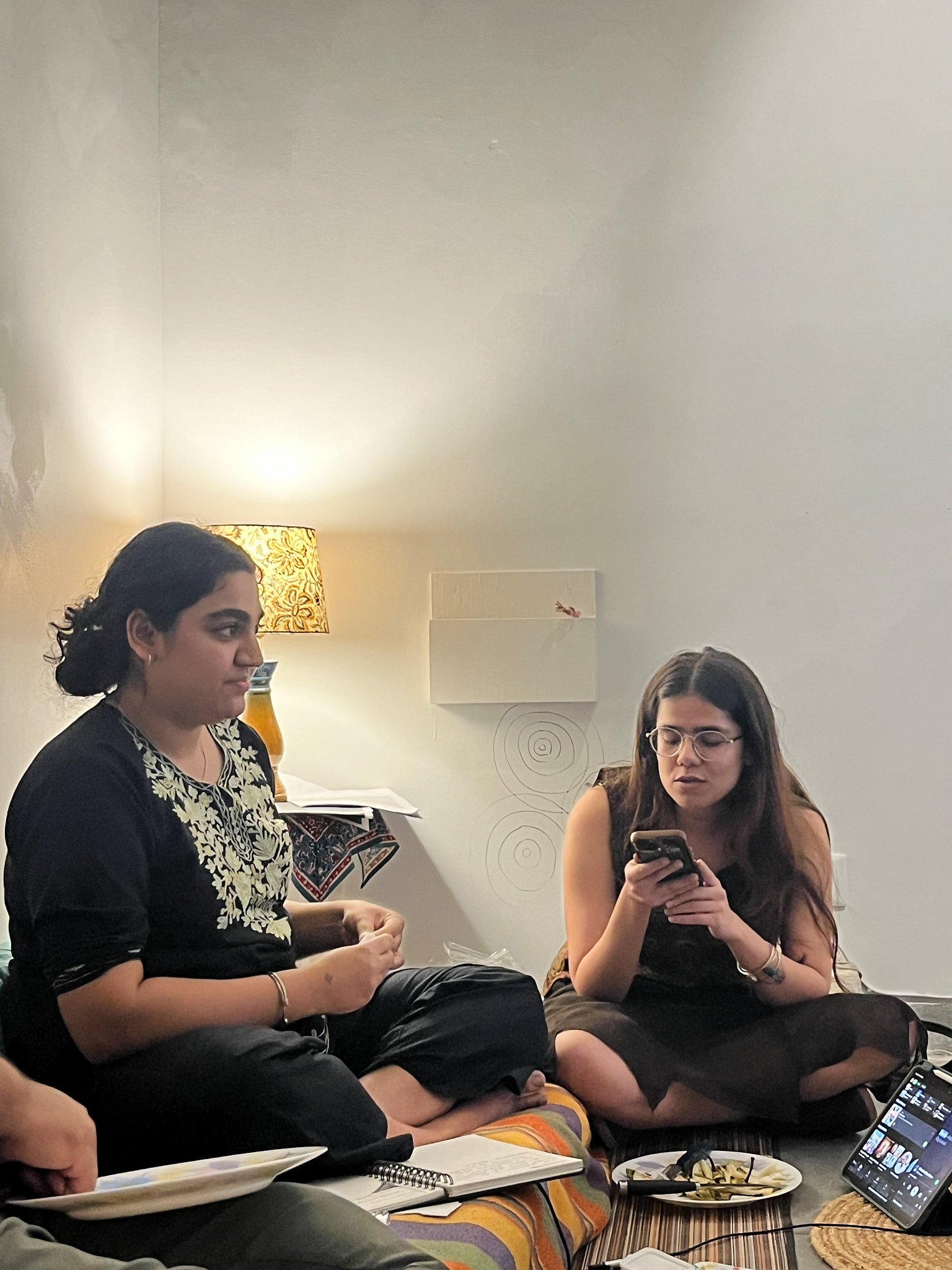
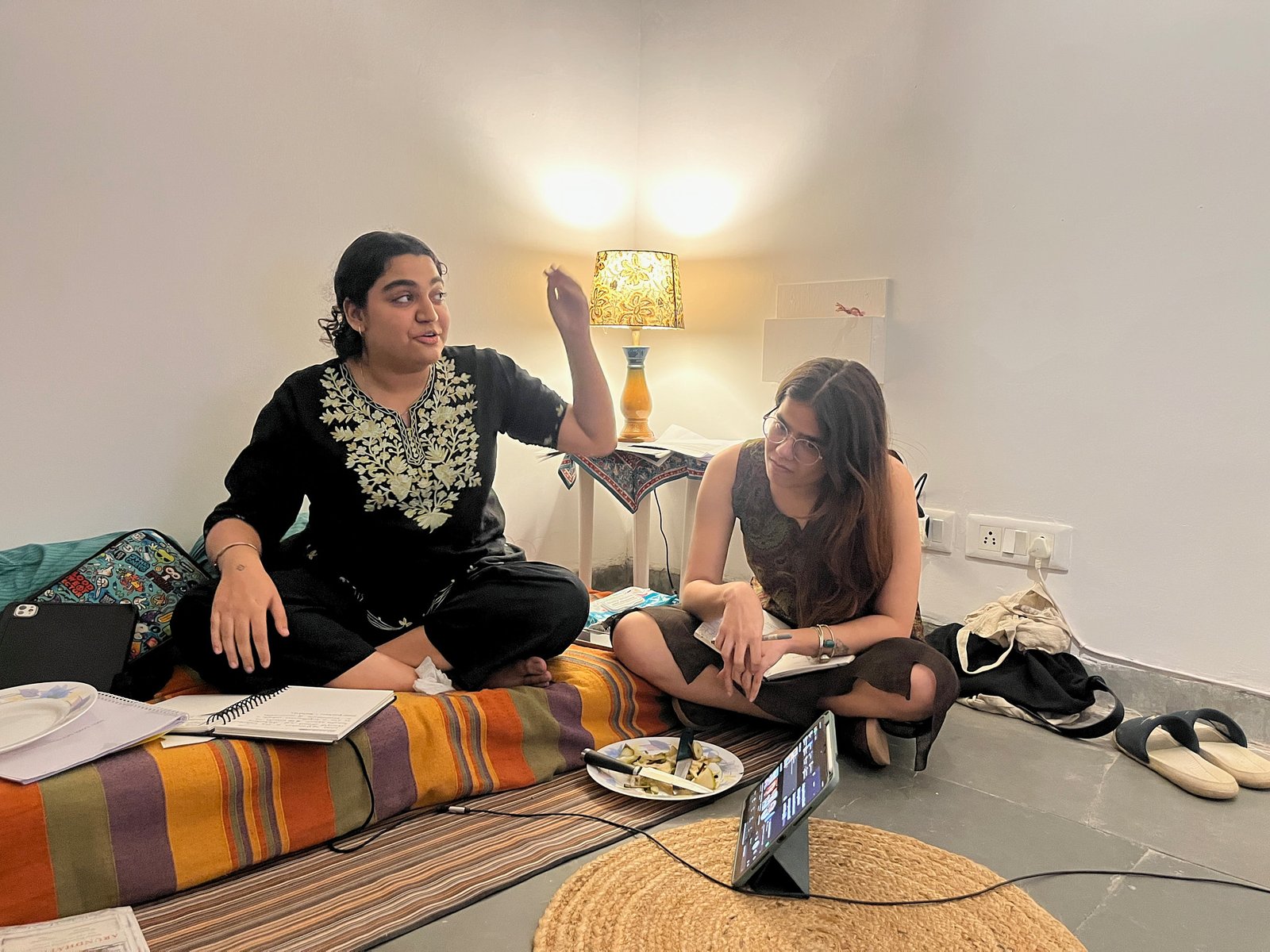
Sabaah and Sabar in midst of Babugosha Baithak. Babugosha is a sweet pear, which was served to the participants of the gathering, as they traced complex gender hierarchies, intertwined selfhood, and what it means to create venues to slow down and listen together. They think through the life of women in Mughal Zananas, who held power equal or more to the ruling men of the Mughal empire. The gathering reflected on the intertwining of the act of listening and how it shapes power and vice versa.